

Reporting
What does the "S" in ESG actually stand for?


What does the "S" in ESG actually stand for?
ESG – the acronym for Environmental, Social, and Governance – has become a major global driver for businesses and the economy, especially since Covid-19. Economic growth is no longer the sole focus; sustainable business practices that involve careful use of resources and the environment have taken center stage. Companies are increasingly driven by stakeholders and regulations to move towards sustainability.
The "S" in ESG stands for Social. Unlike the Environmental and Governance aspects, the social aspect is significantly more challenging to define. While the other ESG aspects – Environmental and Governance – primarily deal with a company's impact on the planet or its internal and political functions, social factors focus on the relationships between a company and the people both inside and outside the organization. The social component of ESG encompasses all types of people-related aspects of companies concerning their employees and the communities in which they operate.
Issues affecting employees include, for example, the company's health and safety record, its policies regarding diversity, equity, and inclusion, and labor relations between management and employees. External issues include the company's relationships with local community leaders, whether forced or child labor is used by suppliers, and product safety.
In business, the social dimension is still often perceived as a secondary role, even though it is one of the essential factors for a company's productivity and profitability. One reason for this is a lack of frameworks for the "S" in ESG. Driven by climate change, the "E" aspect was long the most significant factor in ESG. However, especially since the Covid-19 pandemic, the social aspect has gained considerable attention. Although social factors are significantly more complex to quantify than E and G, it is evident that companies, for example, that pay their employees poorly are likely to face significant difficulties. For instance, Uber lost its driver's license in London in 2019 due to employee exploitation. This clearly shows that companies adhering to social standards can operate more stably and are less likely to face negative consequences.
Naturally, social risks and their potential financial implications vary from industry to industry. For example, workplace safety standards are significantly more critical for an oil drilling company than for a software firm, whereas protecting customer data can pose a higher risk for a software company than for an oil company. If a company focuses strongly on the social factor within ESG, this can strengthen its reputation, preserve its value, and attract new investors. When companies demonstrably commit to improving the well-being of employees and other stakeholders, this makes the company more attractive than competitors who do not focus on social aspects.
Investors will increasingly seek to minimize the risk that social factors pose to returns. Particularly complex social dynamics, ranging from the surge of public opinion online to strikes and corporate boycotts by various groups, influence long-term changes in consumer preferences. Stakeholders can view social factors as important indicators of a company's potential. As with ESG investments overall, favoring companies that consider social aspects can be a way for investors to reflect their values in investments while achieving higher and more reliable long-term returns.
The human factor in business relationships is a crucial element within ESG. Therefore, especially concerning the social aspect of ESG, it is important to communicate openly and transparently and to maintain constant dialogue with all stakeholders to avoid damaging the company's image. Effective engagement can not only strengthen the company itself but also reinforce the community by creating unified values. Thus, companies can gain support and ensure a good standing within society and the community, as community support has a significant impact on local politics.
The social aspect is also particularly evident in the 17 Sustainable Development Goals (SDGs), where social aspects are particularly deeply embedded. 11 of the 17 Sustainable Development Goals relate to social factors, as, in addition to environmental protection, the promotion of social justice is central to the SDGs.
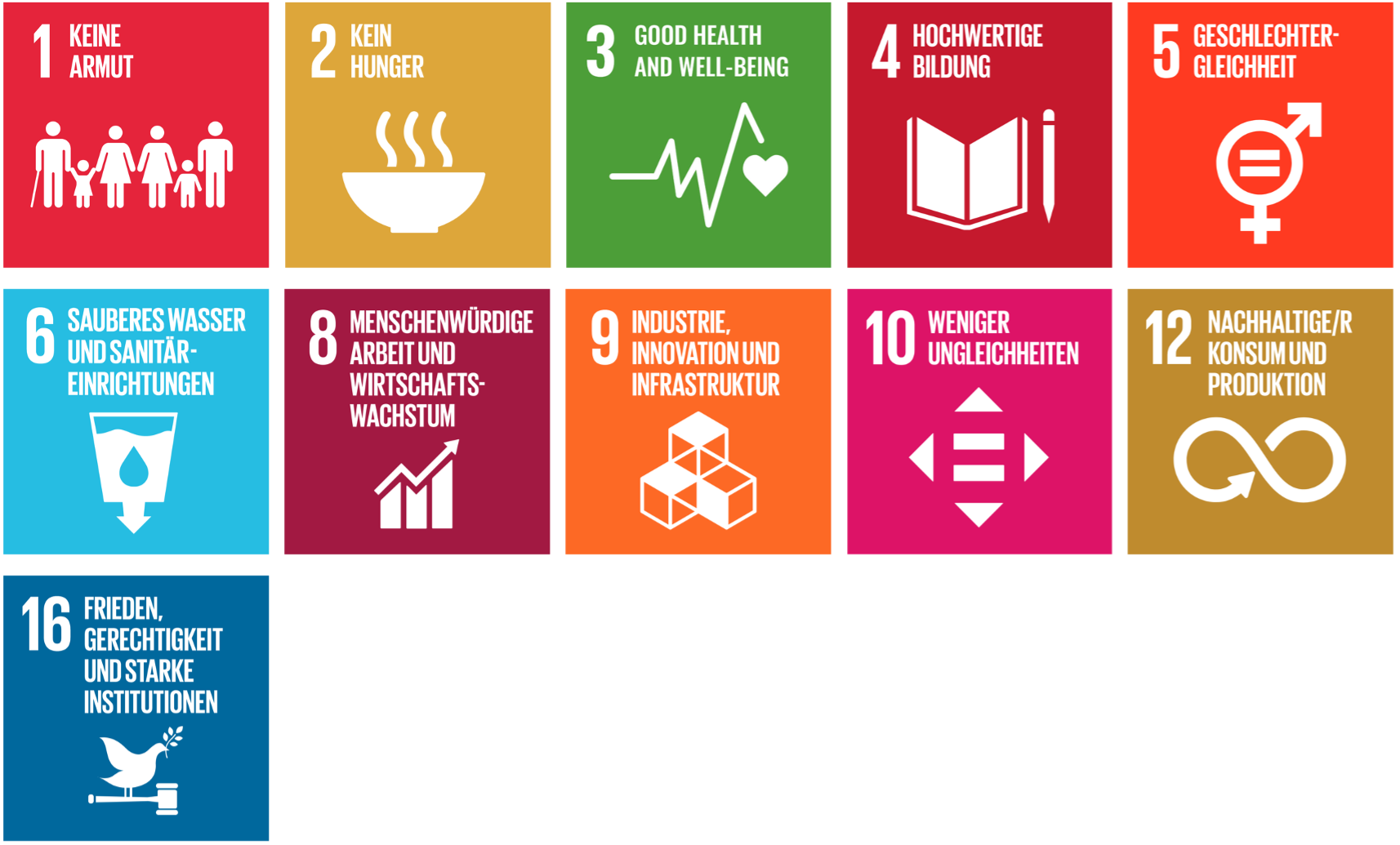
One of the key challenges for companies looking to improve their social performance is deciding which components to include and how to measure and publicize their progress.
At cubemos, we have divided the social dimension of ESG factors into six focus areas:
- Employees, Professional Development & Labor Rights
- Consumer Safety, Data Privacy & Product Quality
- Equality, Diversity & Inclusion
- Community Impact & Dialogue
- Health, Safety & Well-being
- Value Chain & Supplier Management
Employees, Training & Labor Rights
How a company manages its employees, their working conditions, and the respect for labor-related rights is a crucial aspect of its sustainability management. Companies should disclose the strategies, measures, and goals they employ to reduce negative impacts, promote positive impacts, and manage risks and opportunities related to their employees. Information on how companies address labor-related rights, conduct collective bargaining, and organize grievance mechanisms is an important part of this disclosure, as is information on how they communicate with employees. Data on training and an overview of their workforce composition are further points that ensure comprehensive disclosure on this topic.
Key Contents of the "Employees, Training & Labor Rights" Action Area
- Dialogue with Employees
- Labor-Related Rights, Grievance Mechanisms & Collective Bargaining
- Data on Employees & Non-Employees
Examples of Relevant Key Figures for the "Employees, Training & Labor Rights" Action Area
- Total Number of Severe Human Rights Violations
- Average Training Hours per Employee
Consumer Safety, Data Protection & Product Quality
Responsible marketing practices, ensuring customer health and safety throughout a product's or service's lifecycle, and maintaining a high level of data protection can help consumers make informed purchasing decisions. Companies should outline relevant strategies, action plans, and goals for reducing negative impacts on consumers, as well as describe the promotion of positive impacts and the management of risks and opportunities. This also includes collecting data on regulatory violations related to product information and labeling, the health and safety impacts of products or services, and complaints about data breaches and data loss from customers and end-users. Procedures for communicating with these stakeholders about potential impacts should be described.
Key Contents of the "Consumer Safety, Data Protection & Product Quality" Action Area
- Dialogue with Consumers
- Impacts of Products on Health & Safety
- Product Information & Labeling
- Customer Data Protection
Examples of Relevant Key Figures for the "Consumer Safety, Data Protection & Product Quality" Action Area
- Number of Data Breach Incidents per Month
- Number of customer complaints about customer service
- Number of reported data breaches
Equality, Diversity & Inclusion
Actively promoting diversity, equal opportunities, and inclusion in the workplace can bring significant benefits to both the company and its employees. Companies should describe measures to ensure equal treatment and inclusion of employees, such as monitoring discrimination incidents, corrective actions taken, and ensuring the employment of a diverse workforce. Further components of this focus area include information on fair remuneration (e.g., the "gender pay gap").
Core elements of the "Equality, Diversity & Inclusion" focus area
- Fair Pay & Employee Benefits
- Equal Treatment & Inclusion
Examples of relevant metrics for the "Equality, Diversity & Inclusion" focus area
- Total number of discrimination incidents
- Diverse employees in senior leadership
- Gender pay gap
Impact on Community & Dialogue
Responsible marketing practices, ensuring customer health and safety throughout a product's or service's lifecycle, and maintaining a high level of data protection can help consumers make informed purchasing decisions. Your company should outline relevant strategies, action plans, and goals for reducing negative impacts on consumers, as well as describe how positive impacts are promoted and how risks and opportunities are managed. This also includes collecting data on violations of regulations regarding product information and labeling, the impact of products or services on health and safety, and complaints about data breaches and data loss from customers and end-users. Procedures should be described for communicating potential impacts with these stakeholders.
Core elements of the "Impact on Community & Dialogue" focus area
- Dialogue with Communities
- Incidents & Impacts on Communities
Examples of relevant metrics for the "Impact on Community & Dialogue" focus area
- Number of community engagement activities
- Percentage of communities that rate the company positively
- Number of partnerships established with community organizations
Health, Safety & Well-being
Healthy and safe working conditions encompass both the prevention of health damage and the promotion of employee health. Disclosure for this topic area includes both the scope and performance of companies' occupational health and safety management systems. Furthermore, it should describe the processes for employee involvement, the training offered, and the promotion of health and safety in the workplace. Additional data points include the reporting of work-related injuries and illnesses, as well as indicators for work-life balance.
Core Content of the "Health, Safety & Well-being" Action Area
- Occupational Health & Safety Management
- Work-Life Balance
Examples of Relevant Key Figures for the "Health, Safety & Well-being" Action Area
- Total Number of Reportable Work Accidents
- Total Percentage of Employees Entitled to Family Leave
Value Chain & Supplier Management
The commitment to value chain and supplier management that eliminates child and forced labor is a central principle of human rights and subject to national legislation in almost all countries. Companies should describe policies, action plans, and targets to prevent, mitigate, or remedy actual or potential negative impacts on workers in the value chain, including suppliers. This includes working conditions, equal opportunities, health and safety, and other human rights (e.g., access to collective bargaining). Information on your due diligence of suppliers, including the verification of social criteria, is an essential part of this topic, as is information on how companies manage communication with workers within the value chain.
Core Content of the "Value Chain & Supplier Management" Action Area
- Dialogue with Workers in the Value Chain
- Due Diligence & Supplier Screening
- Health & Safety in the Value Chain
- Human Rights in the Value Chain
Examples of Relevant Key Figures for the "Value Chain & Supplier Management" Action Area
- Percentage of Deliveries That Are On-Time and Complete
- Percentage of Deliveries Delivered to the Customer On-Time
.jpeg)
.avif)


.avif)
